
vip@litongglass.com
+86 16632961602

Through the original chip pattern design, BIPV glass shows an unprecedented pure and transparent visual experience while maintaining efficient power generation, redefining the new aesthetic standard of photovoltaic building integration.
Today, as the concept of green building is becoming more and more popular, thin-film solar cells, as a key material for BIPV (photovoltaic building integration), are deeply integrated with architectural glass and have become an important force in promoting the development of "green buildings". With the continuous growth of policy support and market demand, BIPV has been widely used in many projects. As a leading BIPV product manufacturer in China, Mingyang Film Technology has always been committed to creating BIPV products that are more suitable for buildings - Mingyang Electric Glass, empowering architectural aesthetics with technology
However, in the process of BIPV application, a "invisible interference" that affects visual beauty, moiré pattern, gradually surfaced
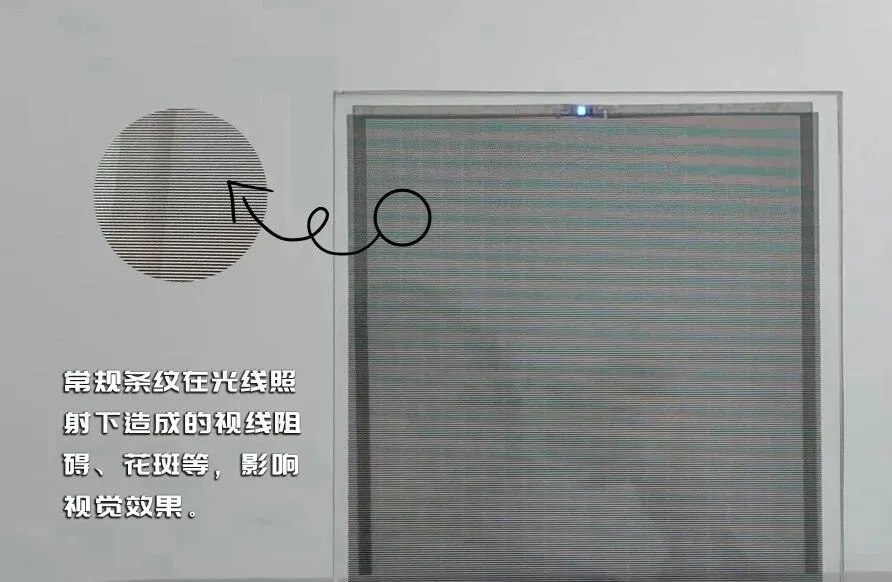
When sunlight hits the BIPV surface at a specific angle, some items will produce visual fringes similar to water ripples, which is an optical interference phenomenon caused by periodic structural superposition, known as moiré patterns. What is a moiré pattern? Specifically, when two sets of patterns with similar periods overlap, it can produce interference stripes with a larger period, disrupting the overall harmony of the building façade.
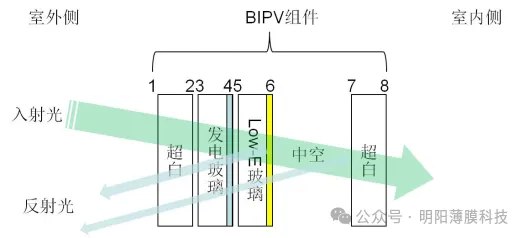
Although light-transmitting film BIPV modules are highly favored in the market, the problem of moiré pattern has long plagued the industry. Through extensive project practice and customer feedback, we deeply realize that completely eliminating moiré patterns is extremely challenging, but this just inspires Mingyang Film Technology's determination to make technological breakthroughs
Restore the transparent nature of buildings with innovative technology
Mingyang Thin Film Technology has successfully overcome this common problem in the industry through the latest light transmission technology innovation. By optimizing the light transmission pattern design of the power generation chip, this process constructs an overall orderly and local random optical structure, which effectively weakens the interference effect caused by the superposition of periodic structures under light and significantly reduces the moiré pattern phenomenon of BIPV light transmission modules.
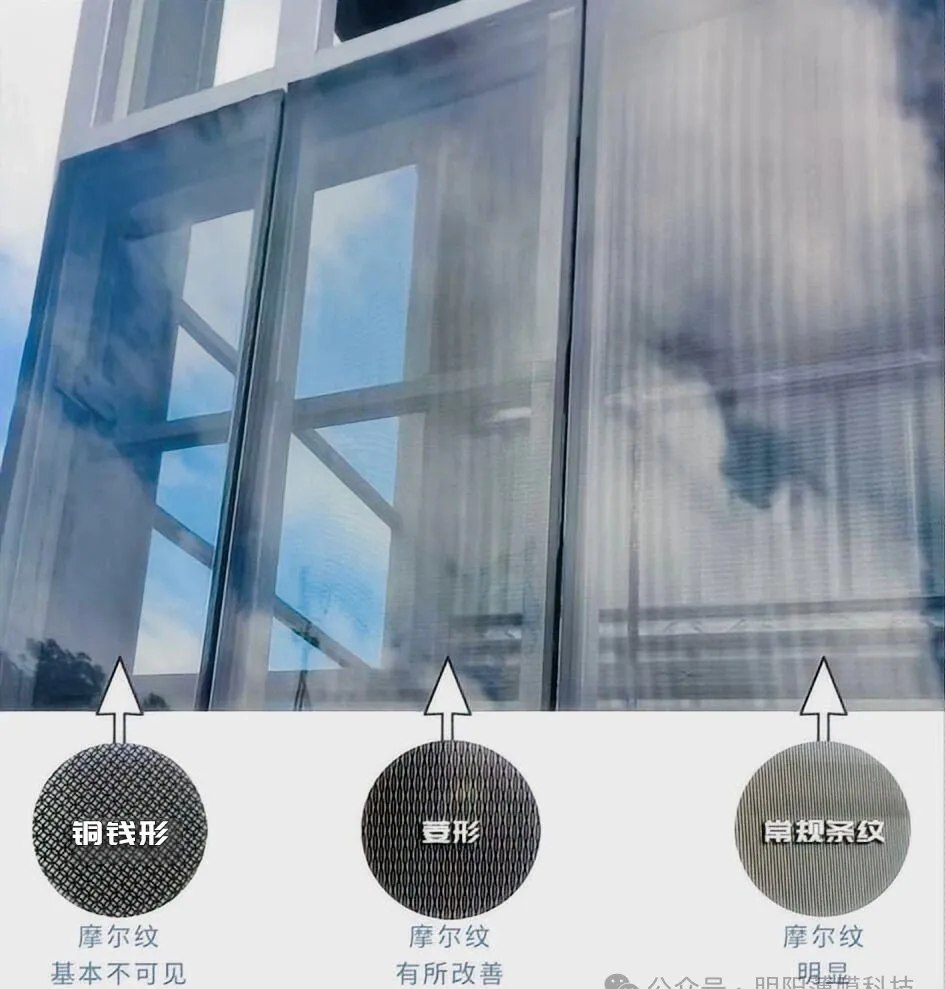
The following are three types of BIPV hollow power generation glass with 40% light transmittance, and the chip uses different patterns for visual comparison: the far right is the common cadmium telluride light transmission module on the market, and the left and middle are respectivelyThe "copper coin-shaped" and "diamond-shaped" pattern chips can clearly see that the "copper coin-shaped" pattern performs well in terms of transparency, greatly inhibits the interference of the moiré pattern, and shows higher light and shadow uniformity and optical quality.
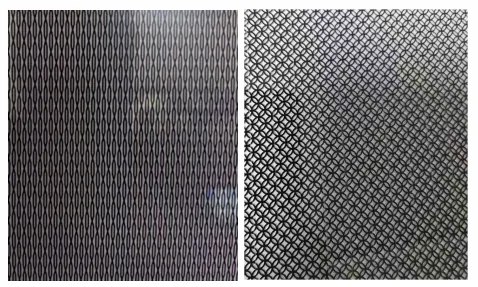
The moiré pattern of conventional power generation glass is obvious, and the internal chip pattern is enlarged as shown in the figure:
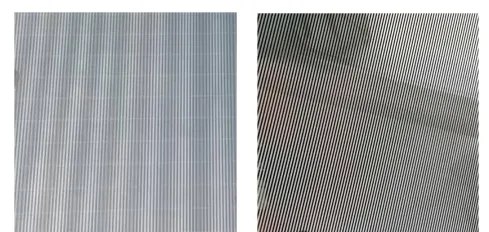
The following is a demonstration of the new micro pattern (two examples) of the chip after enlargement:
Stable performance and all-round shaping of high-end visual experience
Through this new process, the visual effect of the glass curtain wall on the façade of the building has been comprehensively improved, and the exterior of the room is cleaner and more unified, truly realizing the harmonious coexistence of photovoltaic and aesthetics.
Not only that, the process does not affect the efficiencyUnder the same lighting conditions and observation angles, it can maintain a stable visual performance, giving the building curtain wall a purer and more transparent visual characteristics, which is significantly enhancedThe aesthetic adaptability and application potential of BIPV in high-end commercial buildings.
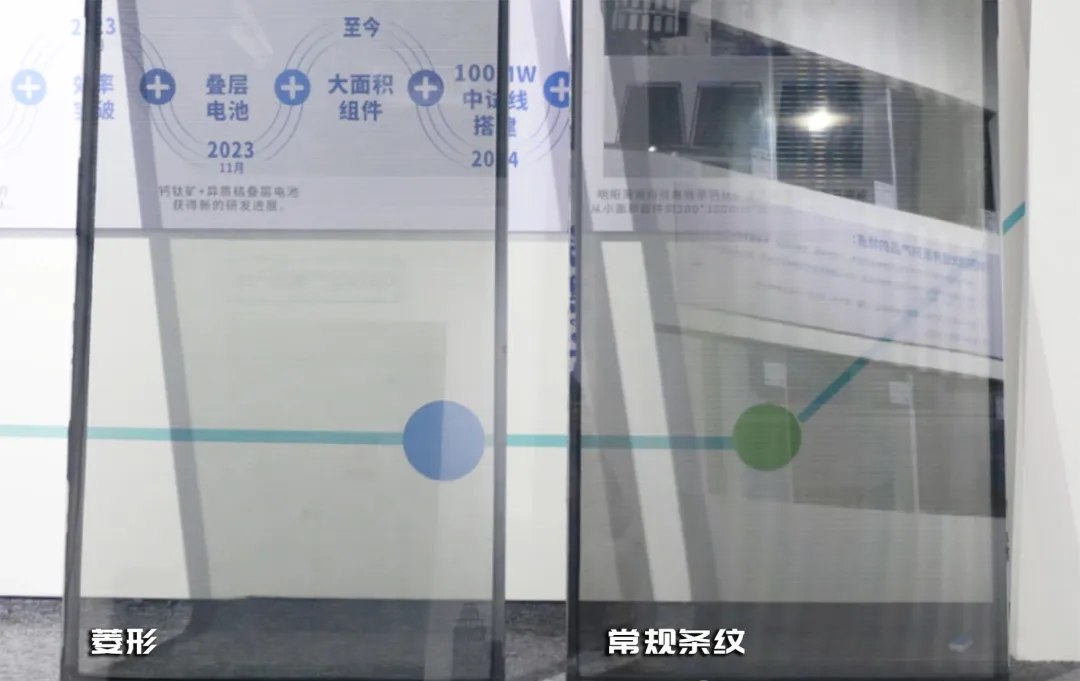
Interior effect: diamond (left); Regular stripes (right).
The technological exploration is never-ending, and the aesthetic pursuit remains consistent
The research and development of this light transmission technology not only solves the long-standing problem of moiré pattern in the BIPV field, but also redefines the aesthetic standards of photovoltaic building integration. Mingyang Film Technology has always adhered to technological innovation to drive product iteration, promoting the continuous evolution of BIPV in the direction of higher aesthetics and higher integration.
"Empowering Buildings · Make the world more beautiful"!
In the future, we will continue to explore the boundaries of technology and aesthetics, inject more green energy and visual enjoyment into urban buildings, and work with the industry to create a future of high-quality BIPV development.
Name: Litong Glass
Mobile:+86 16632961602
Tel:+86 16632961602
Email:vip@litongglass.com
Add:Shahe city,Hebei,China