
vip@litongglass.com
+86 16632961602

Located on the site of the former Busan City Hall, the building has 67 floors above ground and 7 floors below ground, reaching a height of 342.5 meters . Upon completion, it will be the third tallest building in South Korea, featuring a mixed-use shopping mall and a rooftop observation deck offering 360-degree views of Busan. It is expected to attract over one million tourists annually.
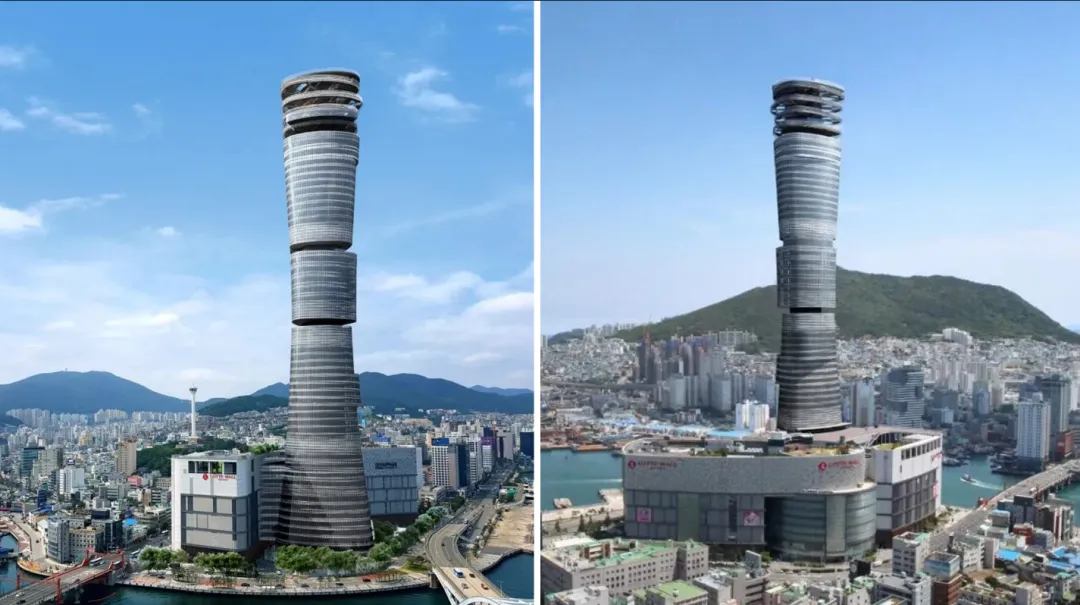
The Busan Lotte Tower project , designed by Japanese architect Kengo Kuma and his firm Kengo Kuma & Associates, is located on the site of the former Busan City Hall .
The project is being developed by Lotte Shopping and is expected to be completed in 2028 .
According to planning data, Lotte Group expects the tower to attract more than one million domestic and international visitors annually, which not only means commercial value but also the reshaping of the city's image.
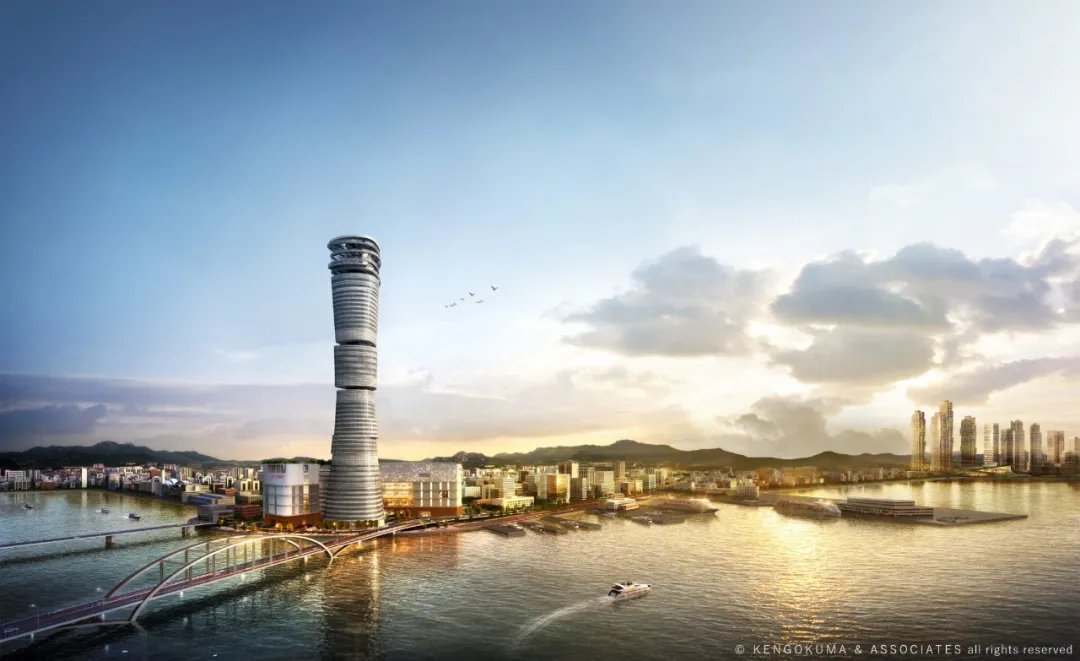
The building is approximately 342.5 meters tall, with 67 floors above ground and 7 floors below ground, and a total construction area of 126,411 square meters. It integrates office, commercial, hotel and viewing functions and will become a new landmark in Busan's skyline after completion.
Its design concept echoes Busan's port city nature, taking inspiration from "the ripples left by ships sailing across the sea," and using flowing lines and reflected light and shadow to create a brand-new architectural landscape.
The location of Lotte Tower in Busan is situated at the interface between land and sea, and this unique site context directly became the core of the design. Kengo Kuma proposed "ripples left by ships skimming across the sea" as the conceptual motif, using flowing lines and light and shadow reflections to construct vertical "sea ripples".
Located near Busan Port, the project's design is inspired by the ripples created by ships cutting through the water. The facade combines horizontal strips of glass with aluminum louvers, gradually evolving from bottom to top: the bottom is highly transparent, transitioning to tinted glass layer by layer upwards, and finally transforming into fine sunshade louvers at the top, creating a floating aerial viewing platform.
The overall facade is composed of multiple layers of light, curved volumes stackedvertically. Each layer of glass and aluminum components forms a subtle interplay of concavity and convexity, gradually revealing a sense of breathability at different scales as the height increases.
Kengo Kuma's team deliberately made slight shifts in the curves of each layer, so that the tower does not appear absolutely straight, but rather creates a sense of rhythm in the visual sense, like the peaks and troughs of waves.
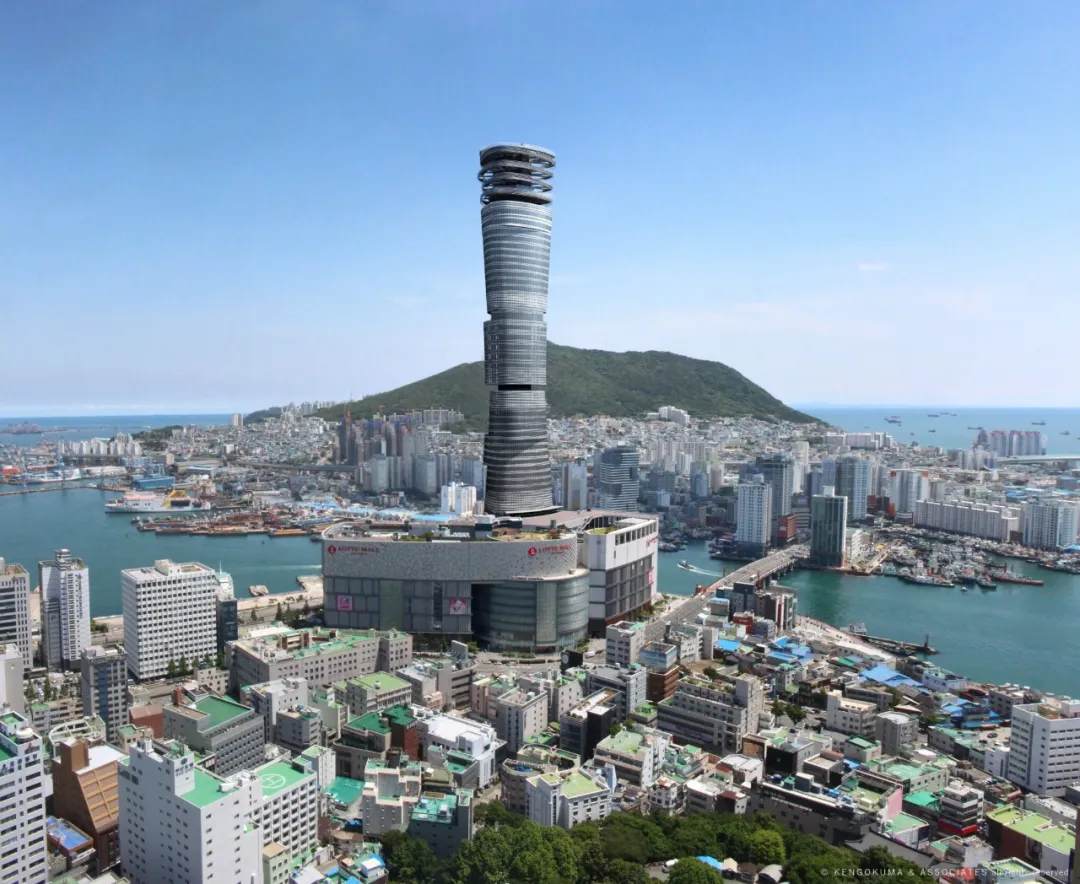
The building's base features a large open platform that seamlessly connects to the city blocks and waterfront promenade, creating a continuous public space. The lower level houses commercial and urban service spaces, the middle level contains office floors and hotel rooms, and the upper level comprises an observation deck and dining areas.
Whether viewed from the distant harbor looking towards the city, or from the city streets looking up at the tower, this rhythmic form always brings dynamic light and shadow refraction, presenting changing visual layers under different conditions of sunlight, sea fog and city lights.
The facade system integrates glass curtain walls, aluminum louvers, and metal components, while maintaining a unified yet dynamic architectural form, meeting the needs for sun shading, ventilation, and views.
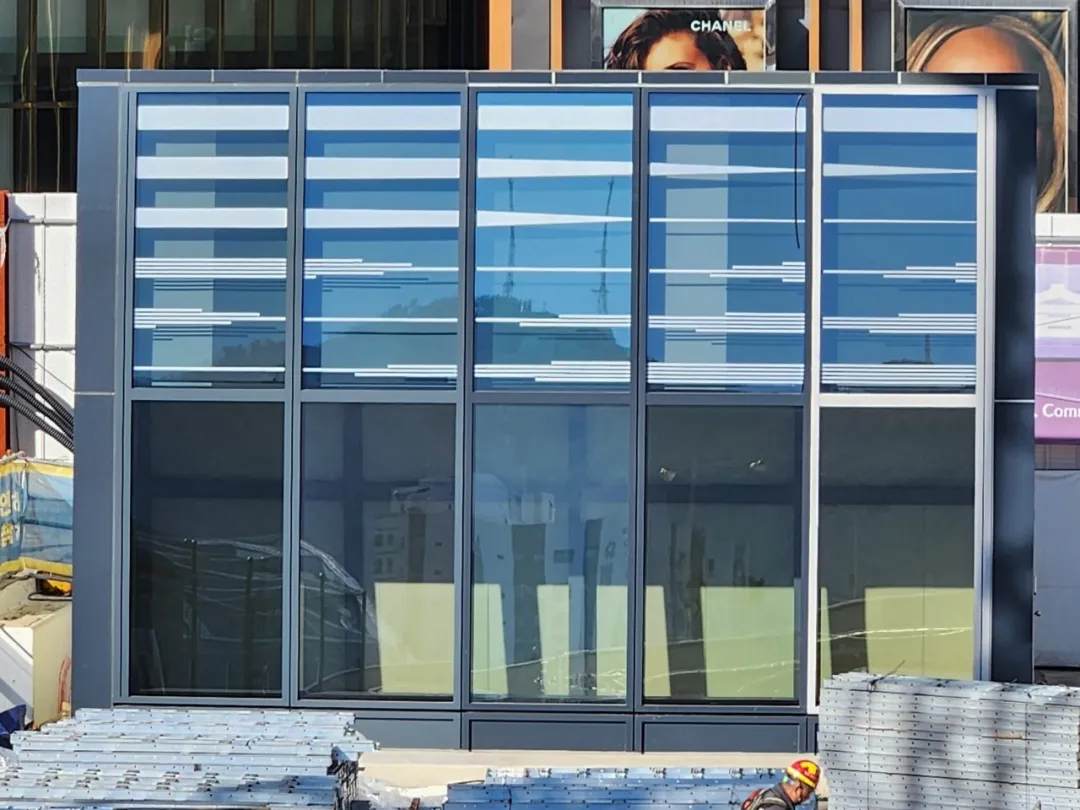
The facade is made of large-area curved glass combined with strip aluminum louvers. The glass gradually transitions from transparent to tinted, and the top floor uses fine sunshade components to filter sunlight, so that the entire building presents a variety of visual effects under different lighting conditions, forming a poetic resonance with the coastal landscape.
This facade design, through the combination of glass and aluminum horizontal components, blurs the boundary between the curtain wall and the building base, presenting a flowing visual experience.
Through the stacking of transparent curved surfaces and the slightly misaligned facade treatment, the building presents a posture that is both soft and full of tension. Unlike the rigid geometry commonly seen in typical skyscrapers, it is more like a ridge of light and shadow that gently twists in the sea breeze, becoming an abstract expression of the coastline extending into the sky.
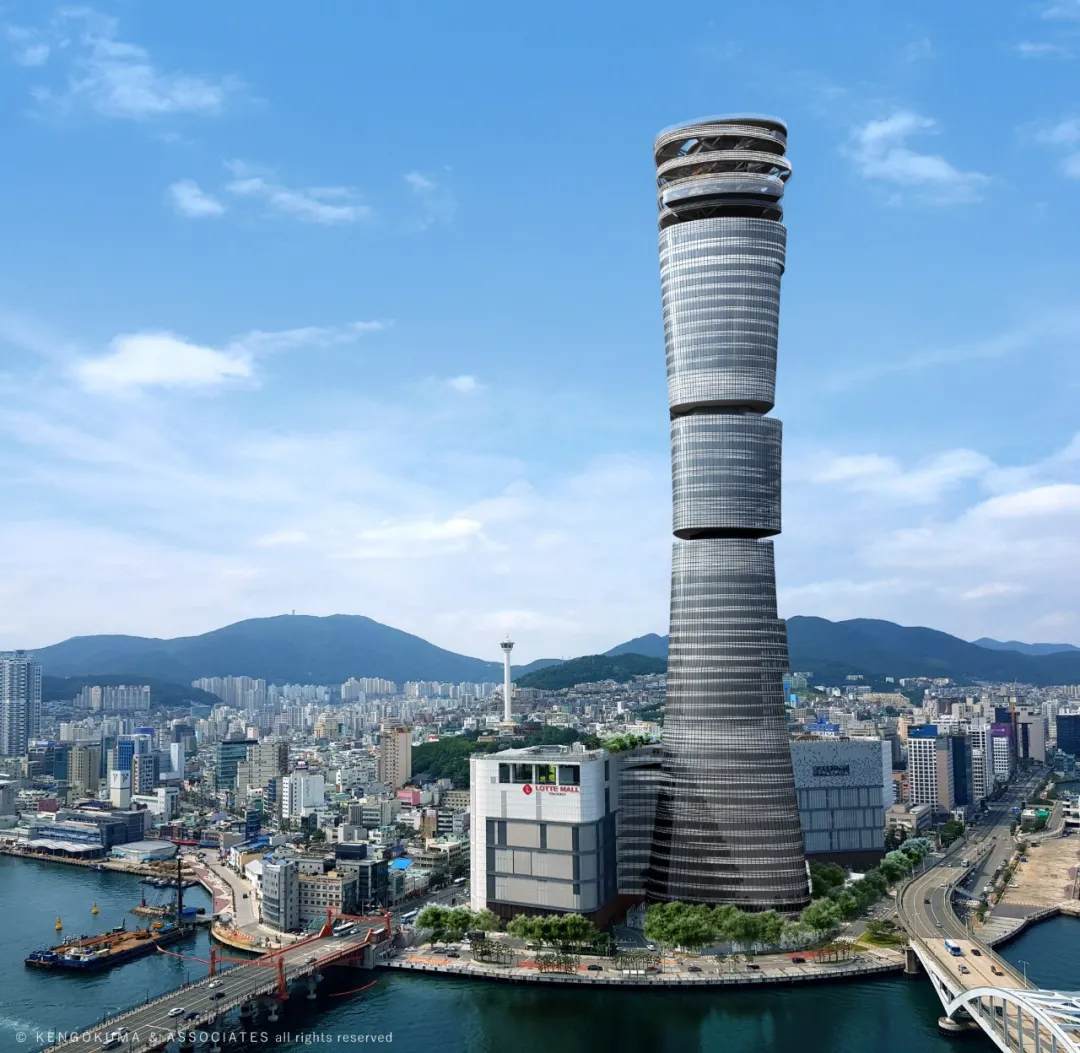
It is worth mentioning that the project has undergone several design adjustments. The early version was handled by SOM and reached a height of 510 meters. However, it was once stalled due to its high cost (industry estimates suggest it exceeds US$2 billion).
Kengo Kuma's team's later involvement brought a completely different design philosophy, and the height was significantly reduced from 510 meters to 345 meters. However, due to the large amount of custom-made curved glass and complex facade system, cost pressures still exist for Kengo Kuma's design.
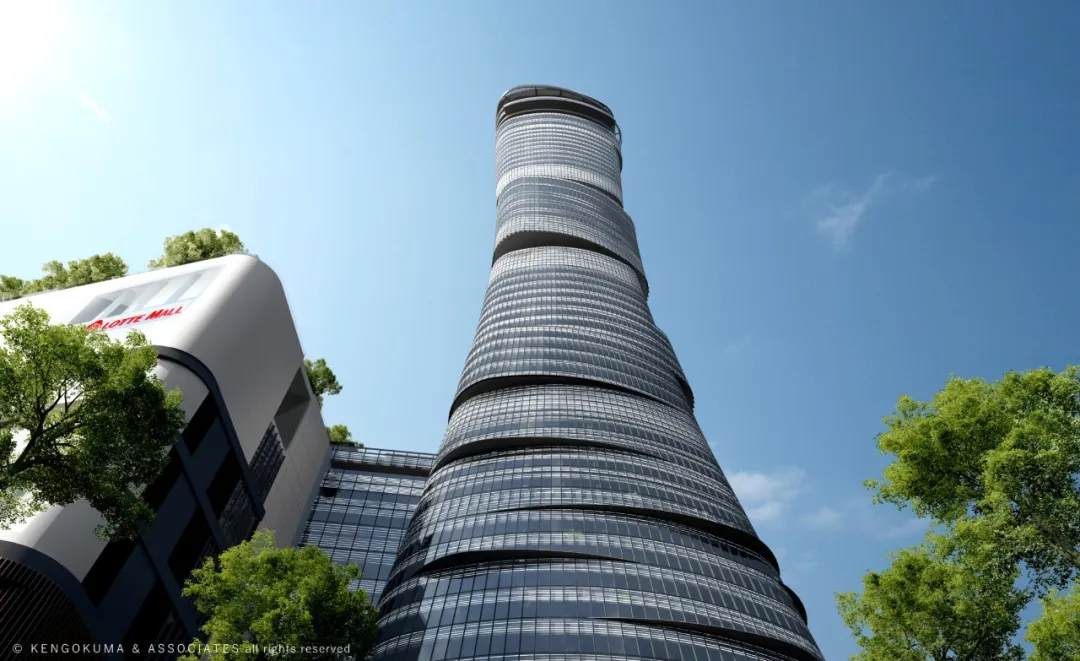
The building is not intended to be an obtrusive landmark, but rather to continue the long dialogue between the city and the sea. Kengo Kuma, with a humble attitude, allows the building to become a reflection of the environment—light and water constantly infuse it with vitality throughout the day. Meanwhile, in terms of structure, the project uses a core tube combined with a steel frame to support the large-span glass facade and cantilevered roof platform.
Beyond its physical structure, the Lotte Tower in Busan also embodies a strategic vision for urban development. At the project's groundbreaking ceremony in 2023 , Lotte Shopping Vice Chairman Kim Sang-hyun stated that the group hopes to make the tower a new urban symbol of Busan and help it become a world-class tourist destination.
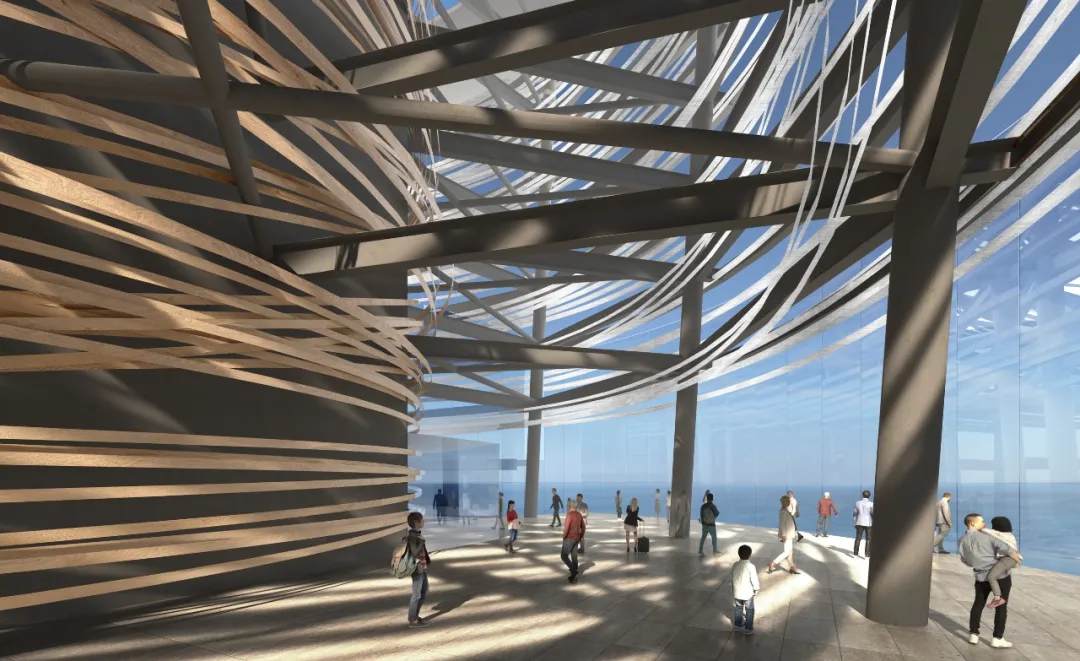
Beyond its architectural design, the Lotte Tower in Busan also carries significant symbolic meaning for urban development and national strategy. Kim Sang-hyun, Vice Chairman of Lotte Shopping, stated at the project's official groundbreaking in 2023 that the group hopes to make this tower a new landmark representing Busan, propelling the city towards becoming a world-class tourist destination.
At the same time, South Korea was actively bidding to host the 2030 World Expo, hoping to use Busan as an international stage to showcase the country's technology, innovation and AI capabilities. Lotte Tower was also once expected to become an important architectural landmark showcasing the image of South Korean cities during the Expo.
Kengo's "Lotte Tower" captures the rhythm of Busan's ocean waves with its flowing glass curves, allowing the 345-meter-tall skyscraper to blend into the sea and sky like ripples.
The subtle curvature of each custom-made curved glass piece weaves the city, the ocean, and light and shadow into a three-dimensional poem—perhaps the most romantic practice of the philosophy of "making architecture disappear."
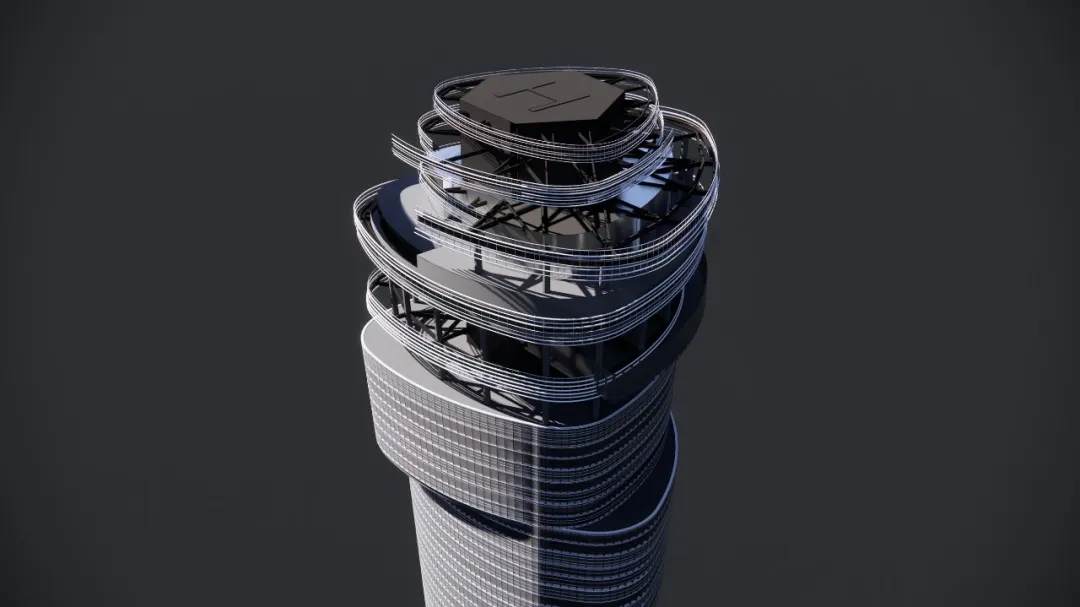
Although Riyadh, the capital of Saudi Arabia, won the final vote with 119 votes, Kengo Kuma's "coastal landscape" architectural language has become a new narrative for Busan, a harbor city.
This tower not only symbolizes Busan's continued expansion of its international ambitions, but also represents a new relationship between nature and city, ocean and architecture. It is not an isolated commercial entity, but rather a three-dimensional architectural language that translates the city's "port" DNA into a three-dimensional architectural language through the translation of light, shadow, curves, and scale.
Name: Litong Glass
Mobile:+86 16632961602
Tel:+86 16632961602
Email:vip@litongglass.com
Add:Shahe city,Hebei,China